As I have experienced all types of childhood trauma and spent the last decade of my adult life in a healing journey, I couldn’t help but view individuals behavior around me with trauma angle. This approach has caused me to suffer temporally from letting go of relations that represented a continuation supply of traumatic episodes from those who are still stuck in denial about how their own trauma has turned them into abusers. Another side I became aware of is understanding responsibility that comes with healing while being surrounded by traumatized individuals. My view of those adult victims have shifted from isolating their harm out of fear that it will compromise my healing to create a larger personal space I never thought possible.
If I imagined aperson located inside a glass cell, then I asked him or her to sing or do any
work that needs to be recognized outside limitation of being inside that cell,
efforts from both sides – mine and his- would be largely fruitless. I thought
of educators, parents, and managers who deal with traumatized individuals as
those who stand unsatisfied outside this cell while victims are shouting
instead of singing while not being aware that a sound barrier is preventing
what they offer to others. Observations of typical victim students would
mislead teachers in many ways. For example, enrolling a student in a fancy
school may give an impression of a caring father. Having evidence of living in
a nice neighborhood may imply that students are living in a safe environment. These
indicators may build up an illusory perception that would create unsubstantiated
expectations of a student who “should be grateful and responsible”. However
regardless of such indicators, 60%of individuals globally had experienced at least one type of childhood trauma.This fact suggests for any society to witness an unpleasant reality where our education and business models lean more on extrinsic motivations than valuing intrinsic ones. This approach is logical if we keep in mind that exploring behavior long enough without judging to see if a trauma impact is at play and time to build
up individual based intrinsic motives to peruse goals is usually beyond our
standard systems of operation, maintenance and evaluation. These specific terms
are taken from industrial dictionary where an implicit assumption is dominating
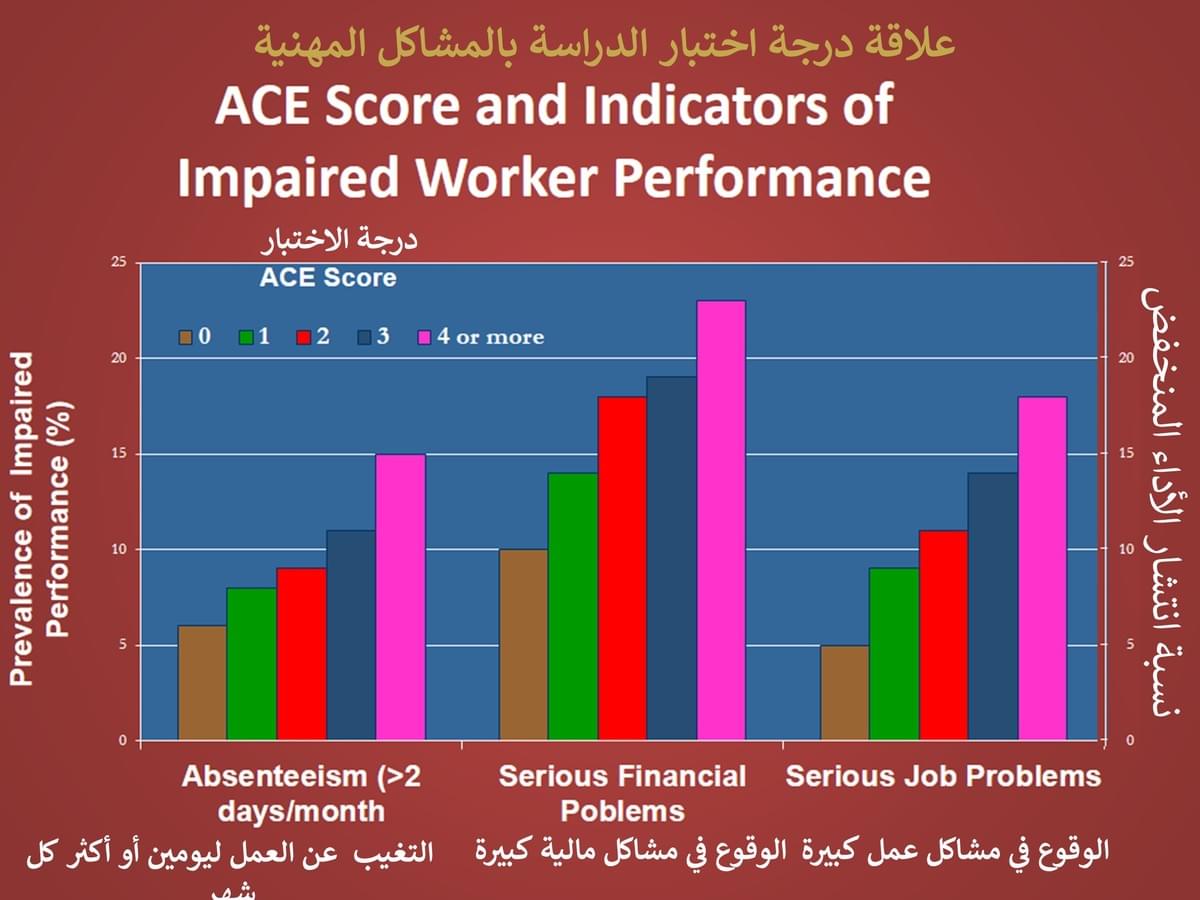
machines, products and services. Moreover, a clear statistic from Adverse
Childhood Experiences study shows clearly that adult victims of child abuse and
neglect are expected to suffer in three main areas of work performance as adult
employees proportional to number of adversaries they experienced. These areas
are absenteeism, serious financial problems, and serious job problems. Each
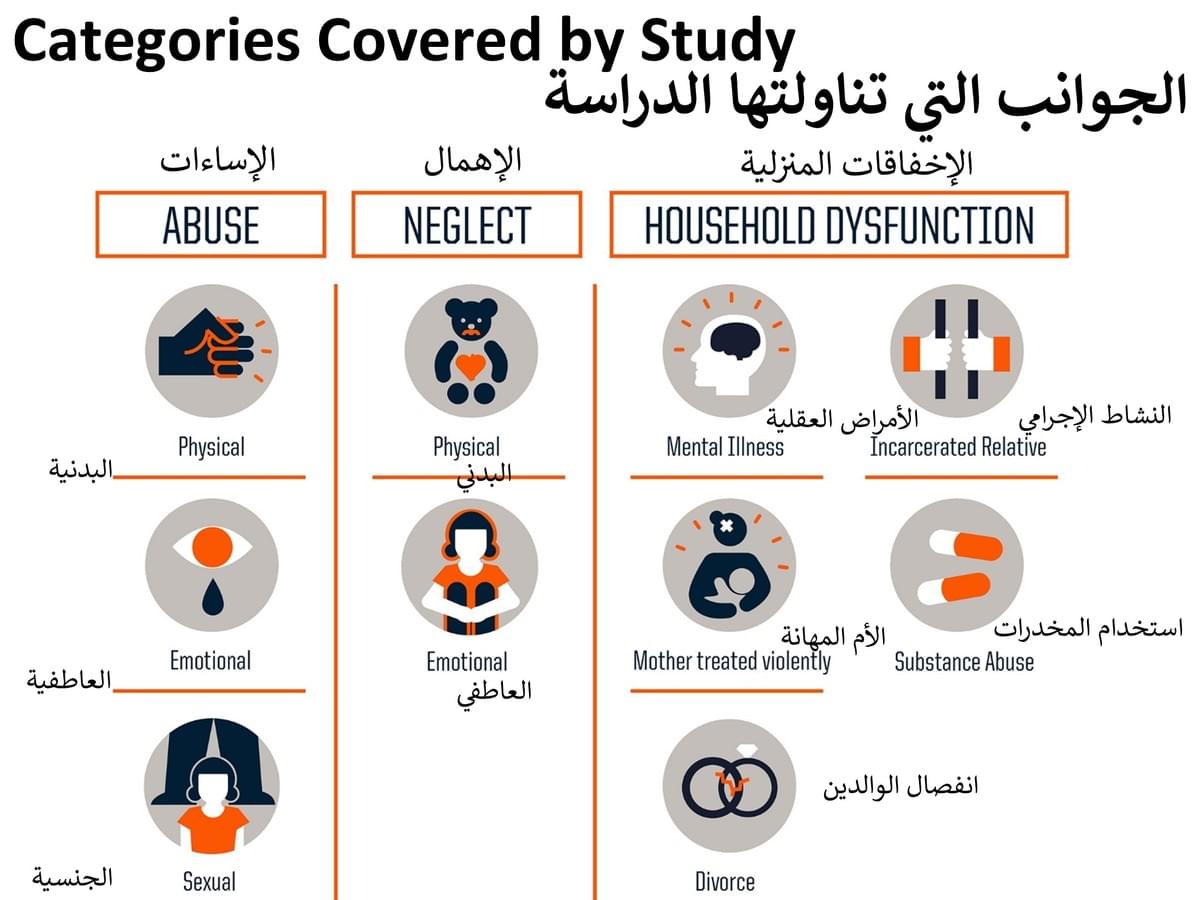
category experienced by abuse, neglect or household dysfunctions count as one
point and scored at the left side chart below.
In an interesting film released back in the ninetiesentitled “Jerry Maguire”, a character played by Tom Criuse was showing a
struggle of performance for 35 years old. A sport agent who realized that his
clients has turned to bonus making machines and character came up with a
mission statement that included “Having fewer clients” got him fired immediatelyafter sharing it. Focusing on a small area seems less productive, doesn’tit? Realistically, such a drama can help us to appreciate slowing down and take more time understanding low performance of a student or an employee as a clue of a deep suffering indicator rather than a lack of competency. Teachers can mitigate this by changing their way of evaluating low performers. for example, offering multiple forms of demonstrating understanding like video making rather than assignment writing can be a kind approach. Alternatively, they can suggest a third-party assessment for those who have learning difficulties while assuring them that they will stay included in their school and maintain their social life
advantages they have built there. Additionally, parents can stay silent long
enough when discussing daily events about what happened at school. Eventually,
managers can try to go a step further into “Why” a person has behaved in a
certain way before concluding a shortcut evaluation that only maintains status
rather than improve individual’s output.
Today, my journey has taken a trauma informed directionafter healing enough wounds that were planted decades ago. Now, I have become focused on wellbeing and redesigning expectations of those around me who are still in denial. First, I have completely cut off bond with toxic adults. This crucial action has ended with a simpler network with many vacancies. These vacancies are not waiting to be refilled. It is like having a family tree with only two uncles, no father, no mother and no elder brothers. This new structure has created a model that is more realistic with my actual limitation of managing relationships where only healthy relations can exist and flourish gradually. This
personal space expansion is more authentic as it reflects only the functional part of my family branches. Second, I renegotiated terms with those who shared parallel authority with me like my spouse and friends. Here, there is an interesting dynamic of healing through relations. Discussion is always about healthy VS abusive ideas and practices. So, knowing that these relations are by choice offers a lot of room to seek a compromise that allows everyone to become a better negotiator. It also helps in recognizing areas where trauma is there to stay and reduce energy devoted to include it in negotiations. For example, a toxic relative of a spouse can still be in touch while excluding the partner as
long as this relative does not get involved in anything related to something
integral in partners relationship. The key thing here is that balance of
authority allows such exception because it can be isolated by design.
Yet, every survivor has the rightto build trauma informed when time feels safe to do so. In my case, I was piled up with responsibilities when I started my healing journey. I felt selfish and unsure at the beginning, however, that was part of healing where I strengthened my agency and tolerate my mistakes. As of today, I am proud of most of my healing journey’s decisions and wish all survivors a similar outcome.
